
Flyout Menu
SEARCH
“I think my primary appreciation of Cage’s Ryoanji works is the process and how the decisions are made. I feel a close affinity to his passive approach as it is similar to mine, in which choices are determined by the materials themselves and by non-subjective actions (chance for him; for me, found pre-existing bits of language that generate their own rules, structure, and interior logic, depending on the components of the text.) Minimal intervention by both of us.”
– Kay Rosen
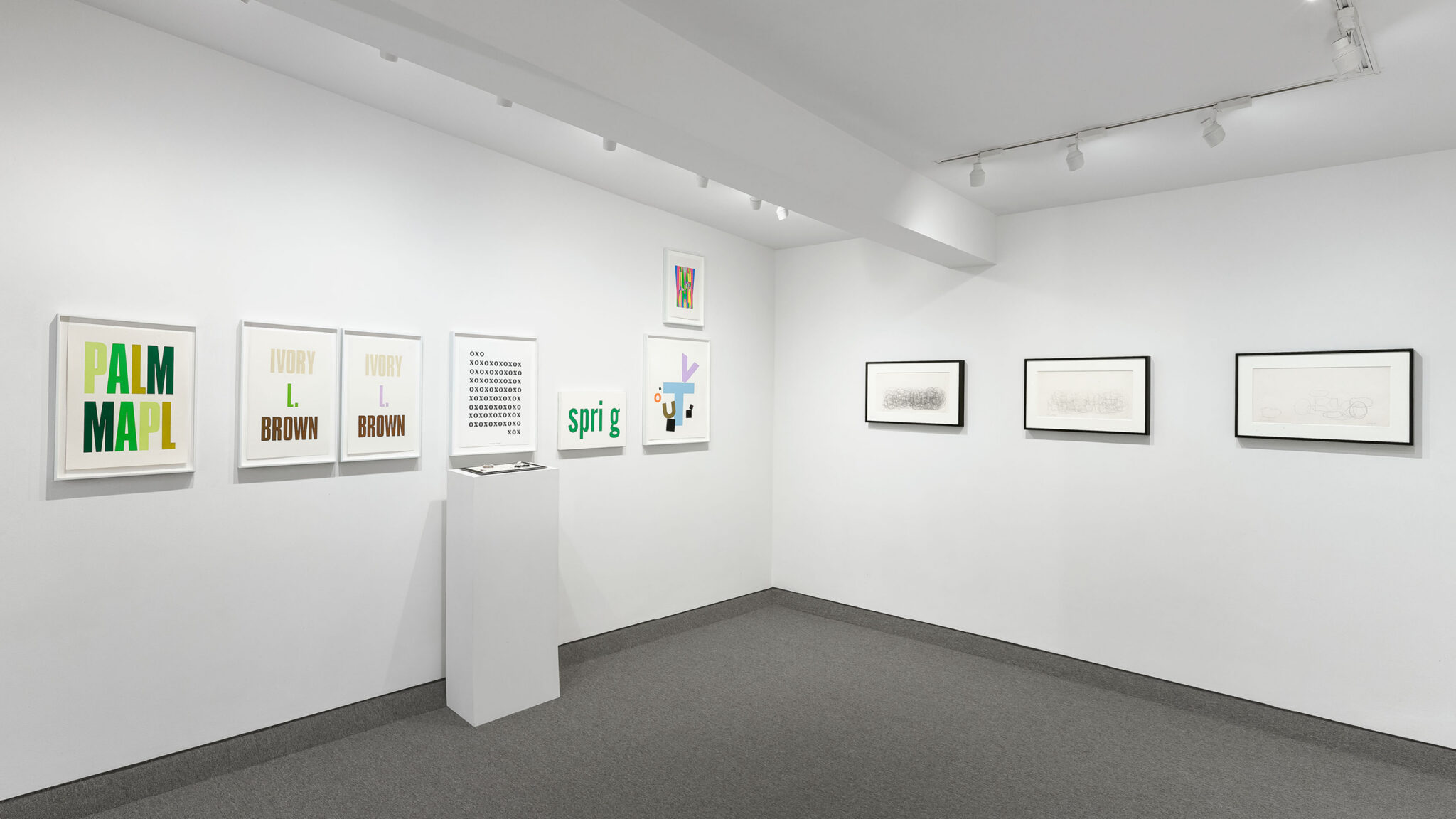
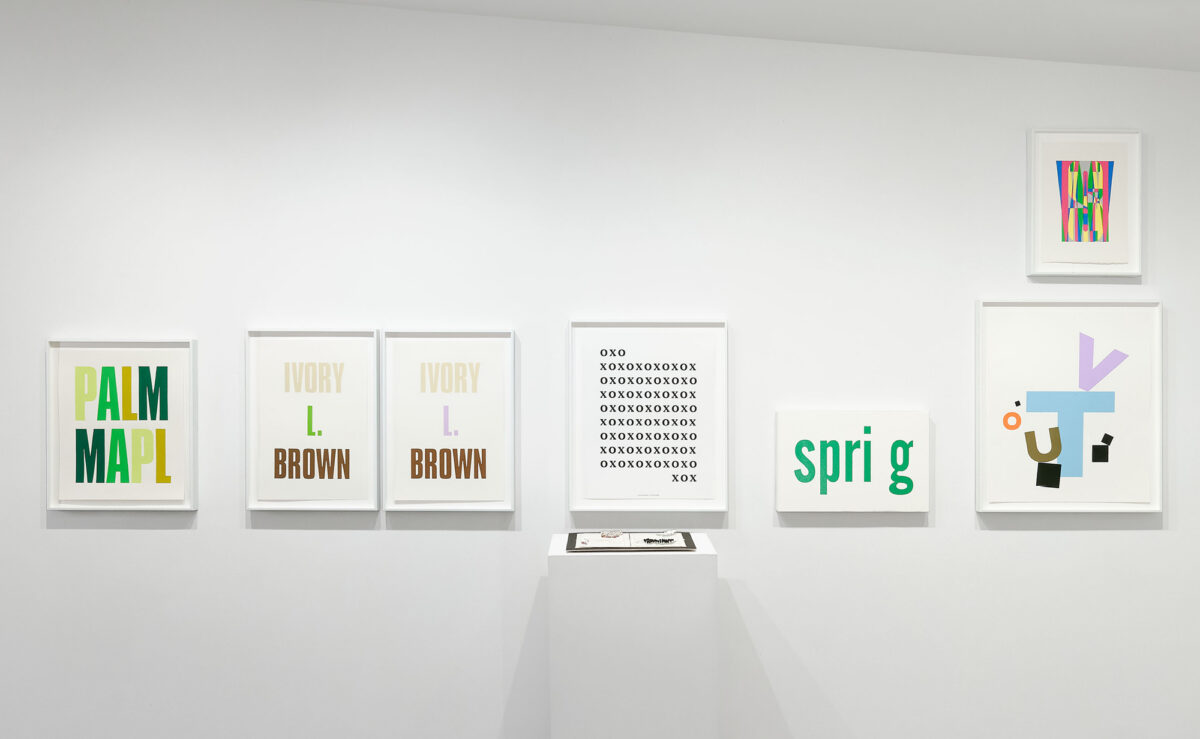
The current exhibition arranges works from the past 15 years by Kay Rosen with works from 1983 by John Cage. While not an obvious aesthetic or conceptual pairing, the juxtaposition of works hopes to provide more nuanced understanding and appreciations of both artists’ approaches to observation, appreciation, chance, choice, and control.
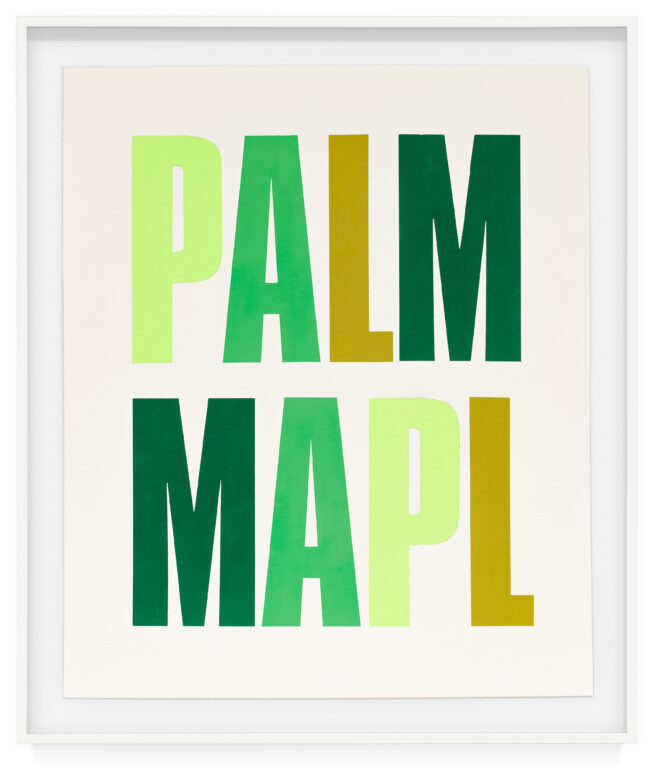
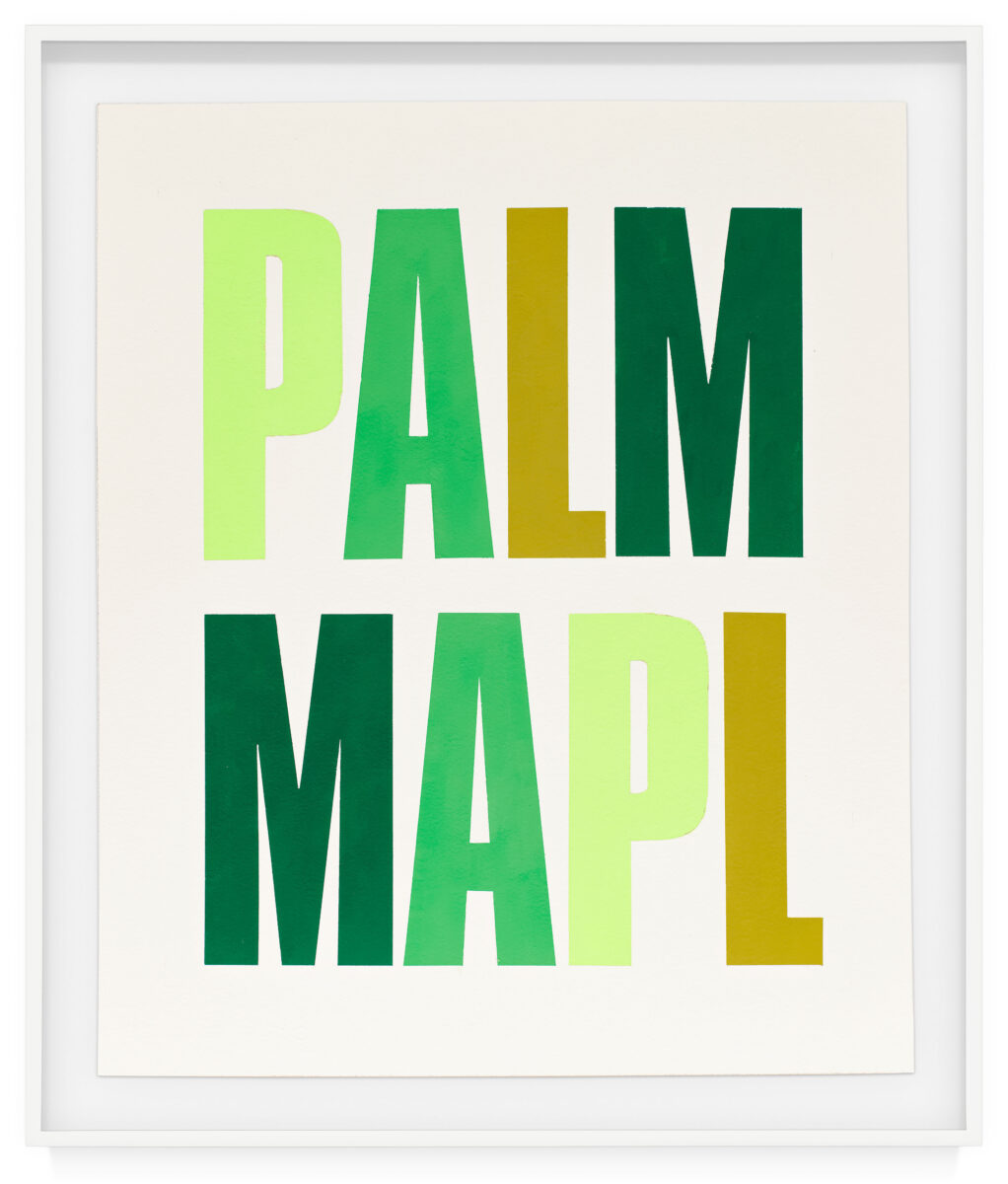
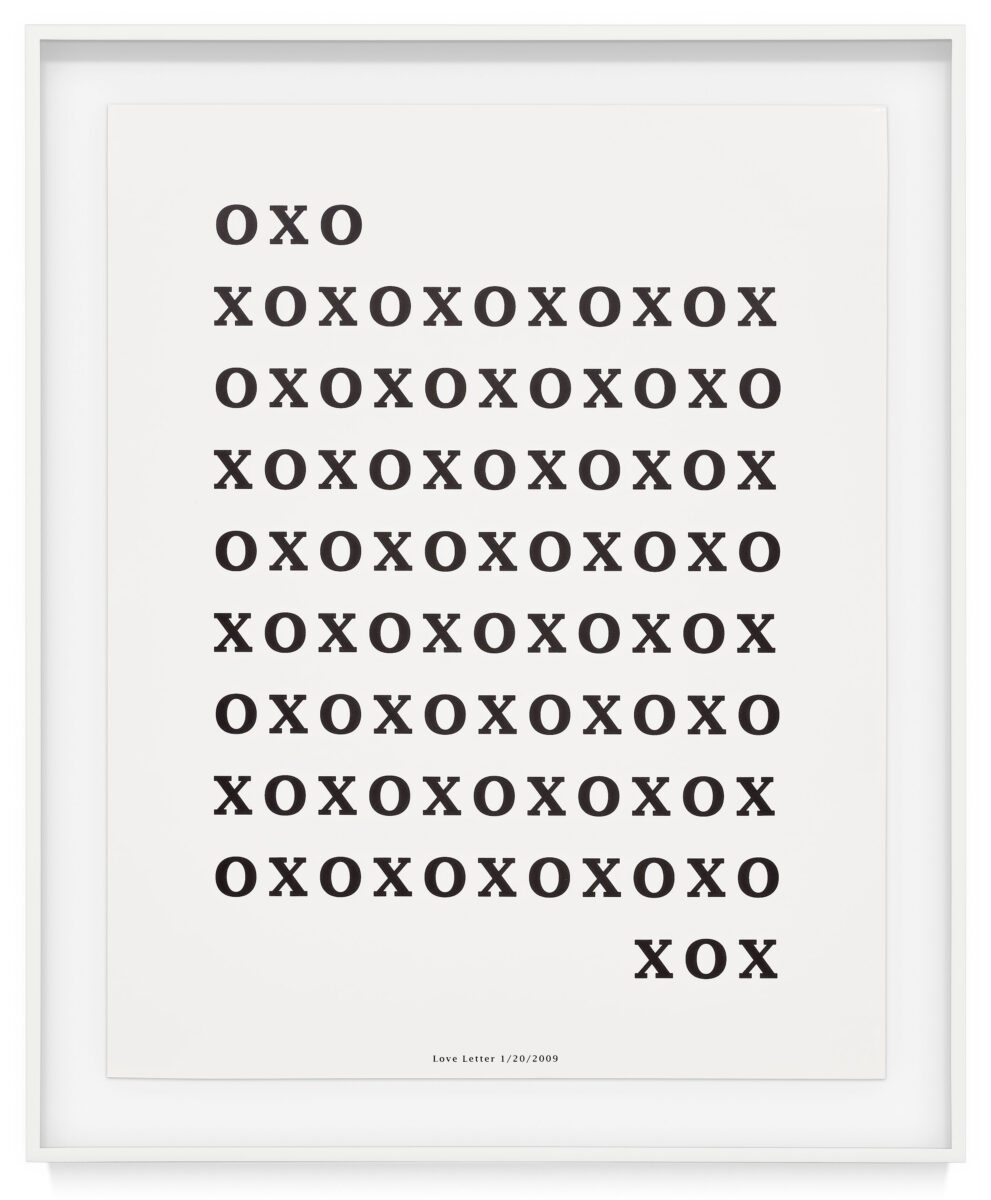
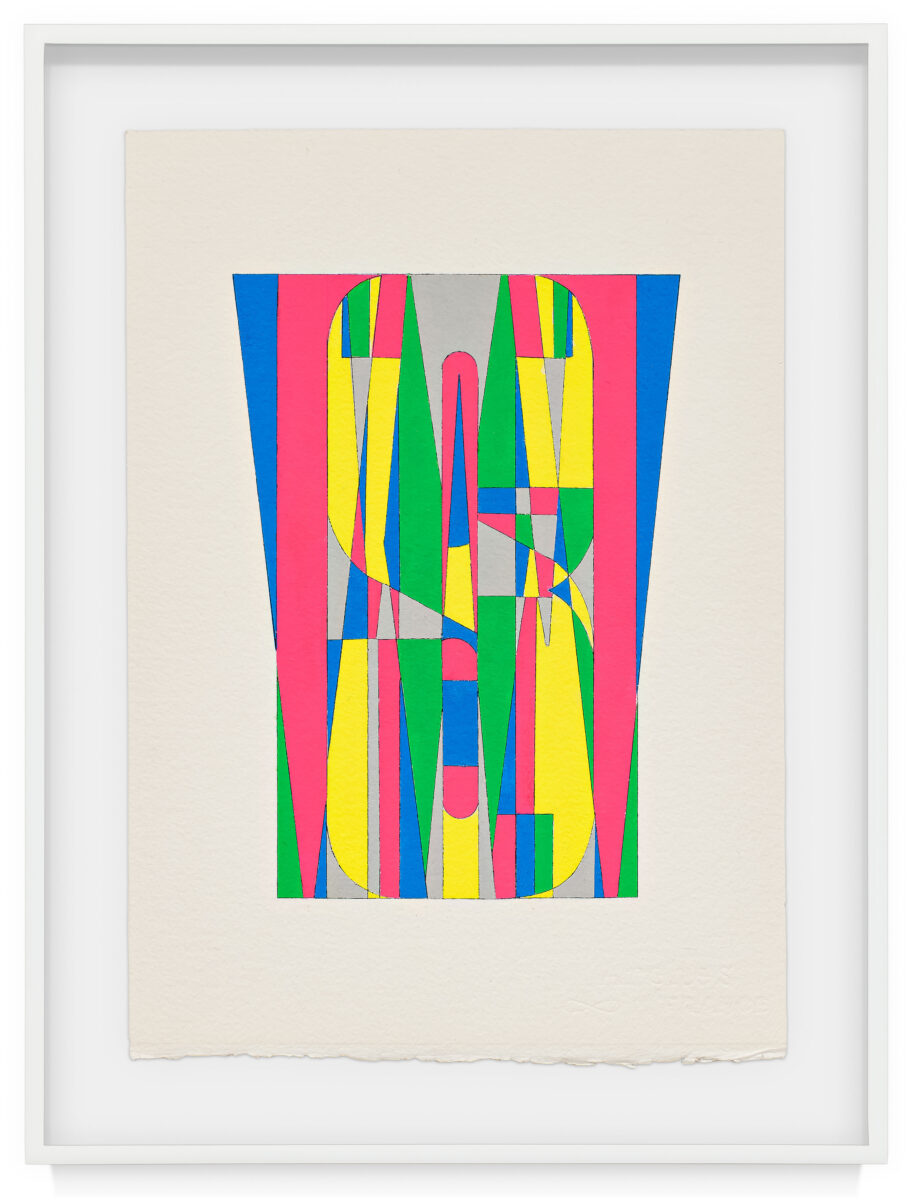
Kay Rosen’s investigation into the visual possibilities of language has been her primary focus since 1968, when she traded in the academic study of languages for the study of language-based art. Through paintings, drawings, murals, prints, collages, and videos, Rosen has sought to generate new meaning from everyday words and phrases by substituting scale, color, materials, composition, graphic design, and typography for the printed page.
While political issues often form the bedrock of Rosen’s artwork, she insists that her work is driven not by politics, but by language, and she follows it to whatever place it takes her. Rosen loves the physical act of drawing and painting, and materially her paintings and drawings are intensively rendered. However, she considers language to be found material, conceptually placing her in the more passive role of a cognitive observer and enabler of language. The writer Rhonda Lieberman described her as a revealer of language who “shows it doing things that are totally above, beyond, and/or below its function as a mode of communication.”
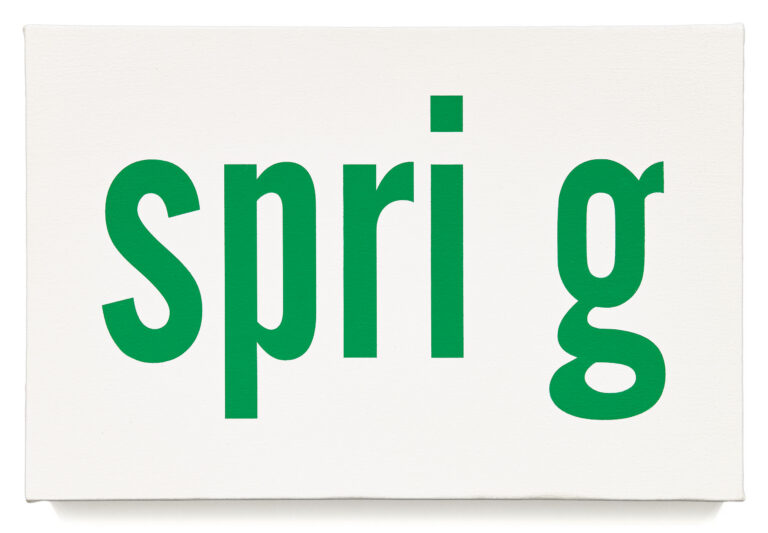
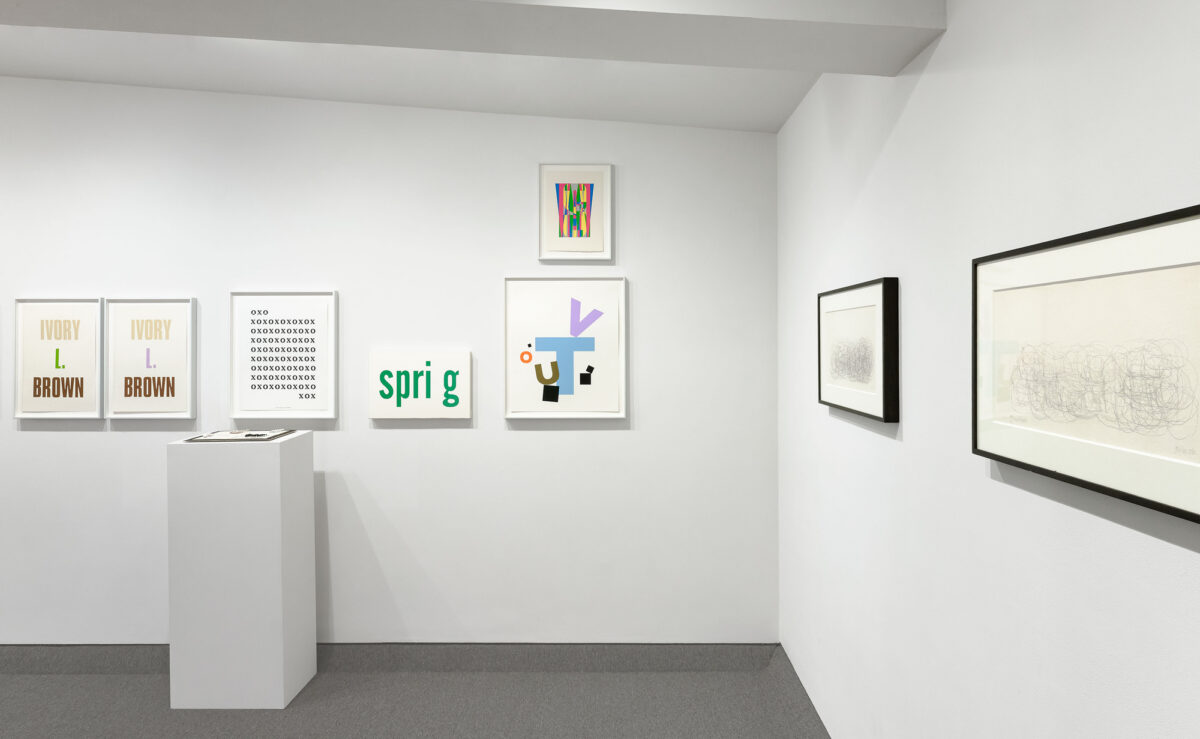
One of the works included in the presentation is “Spring,” a painting which, like many of Rosen’s works, strives for efficiency and economy. It finds a way to enhance the meaning of spring without adding a word. It cannibalizes one of its own body parts, the letter N, turning spring into sprig, five little green shoots. “Spring” is a found work that almost makes itself. Rosen’s intervention is merely a small excision of a letter, leaving behind a new word that suggests hope.
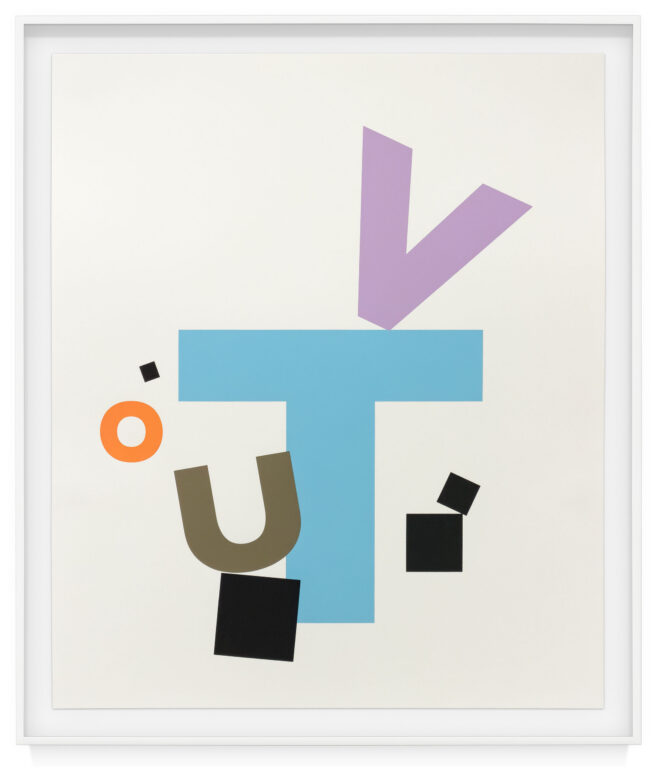
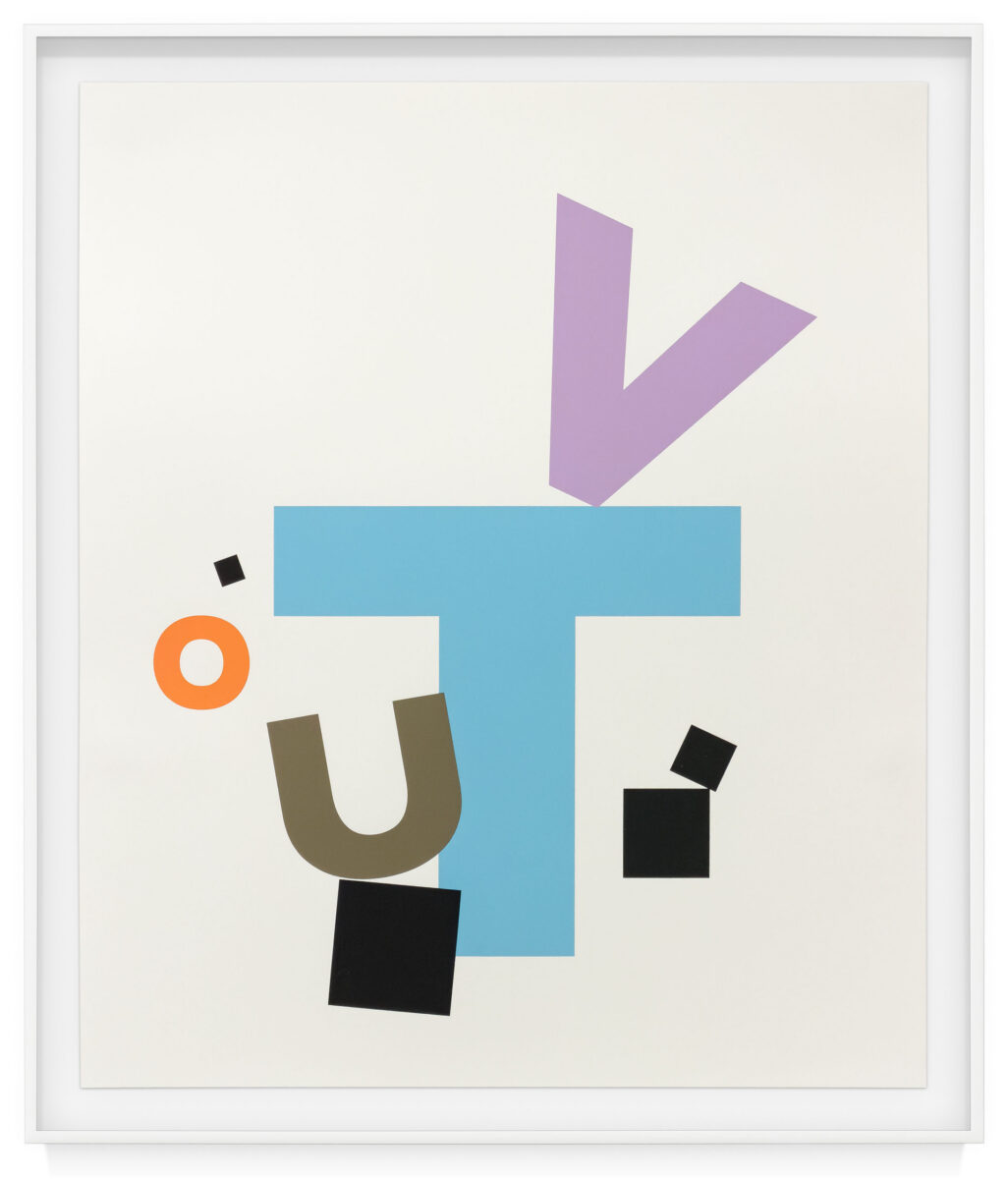
Rosen has always been attracted to the letterforms themselves, all twenty-six of them. She finds it a happy coincidence when the initial letter of a word reflects, through its shape, the object that the word represents. In the print “Still Life with Blue Table (Earthquake),” the letters T, O, V, and U become a sort of visual-verbal shorthand of a still life with a Table, an Orange, a Vase, and an Urn, all slightly thrown off-kilter by the earthquake. There is always some catastrophe, never so much as today, that disrupts the stability of a still life and challenges the concept. Mixed in with the objects are four dark square shapes of varying sizes corresponding to the letters/objects. They represent the periods that grammatically follow an initial letter.
Much like the found nature of the elements of her individual works, the arrangement in the current show is also a mixture of found (the works are arranged alphabetically by title) and artistic vision (which works are included so as to create the most compelling composition).
Kay Rosen has been the subject of numerous articles, reviews, and group and solo exhibitions, including in 1998 a two-venue mid-career survey entitled “Kay Rosen: Li[f]eli[k]e,” curated by Connie Butler and Terry R. Myers at the Los Angeles Museum of Contemporary Art and Otis College of Art Design. She has been the recipient of awards that include a Guggenheim Foundation Fellowship in 2017 and three National Endowment for the Arts Visual Arts Grants. Her work is included in many institutional and private collections. Rosen taught at The School of the Art Institute of Chicago for twenty-four years. She was born and raised in Corpus Christi, Texas in 1943 and lives in New York City and Gary, Indiana.
“When you start working, everybody is in your studio—the past, your friends, enemies, the art world, and above all, your own ideas—all are there. But as you continue working, they start leaving, one by one, and you are left completely alone. Then, if you are lucky, even you leave.”
– John Cage
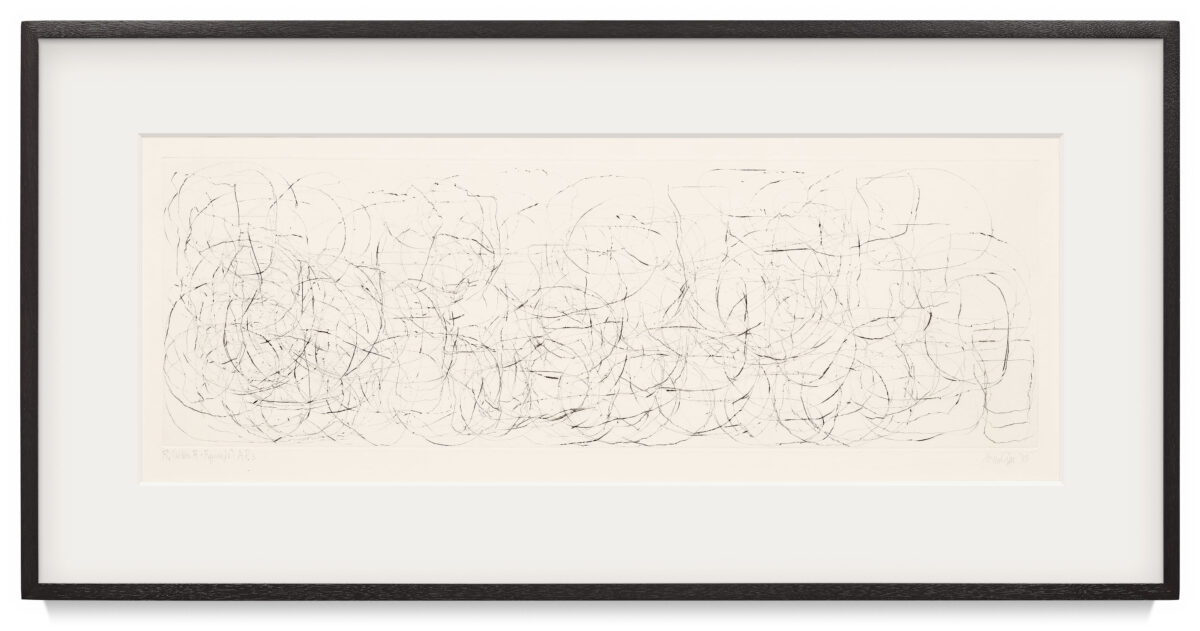
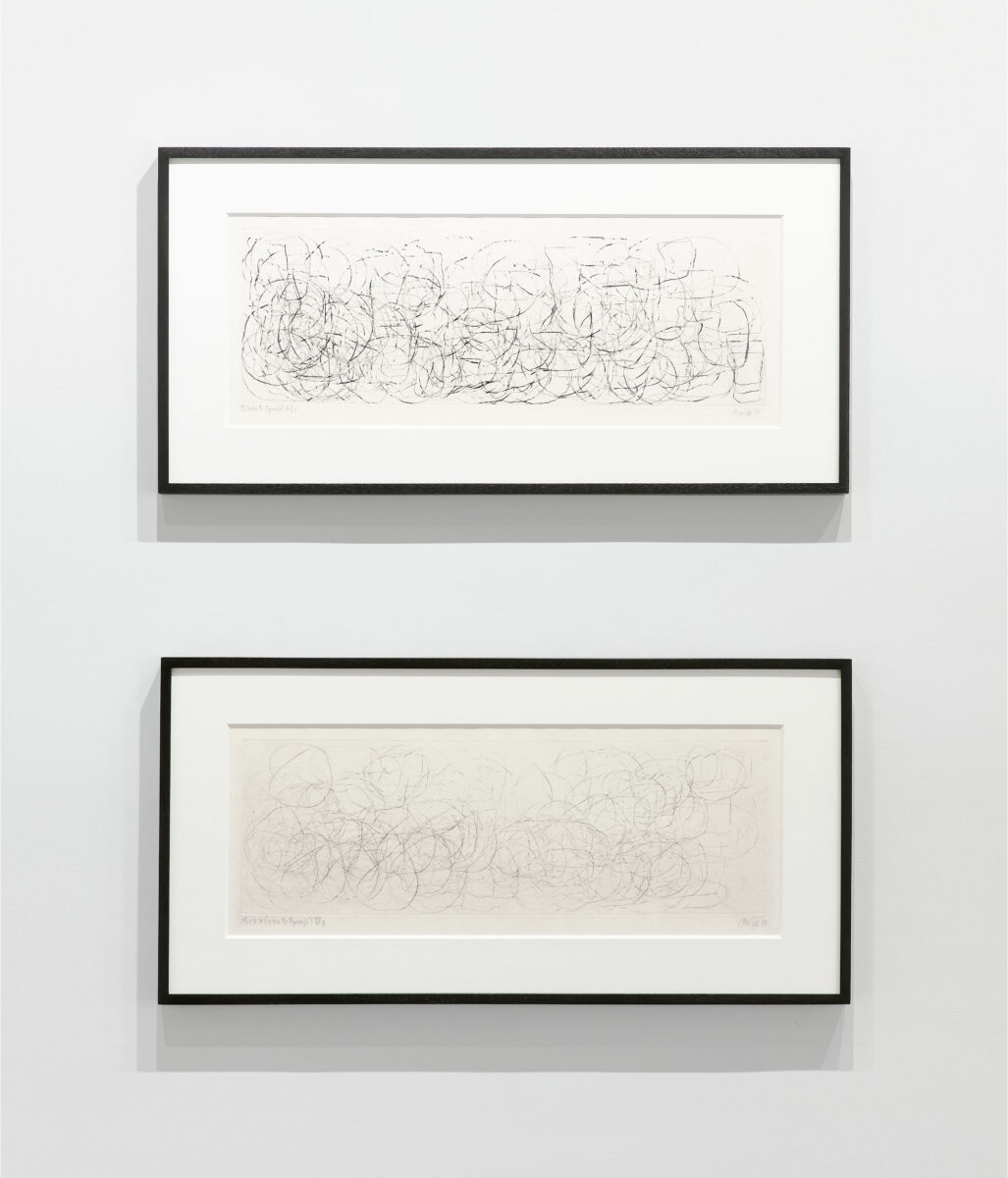
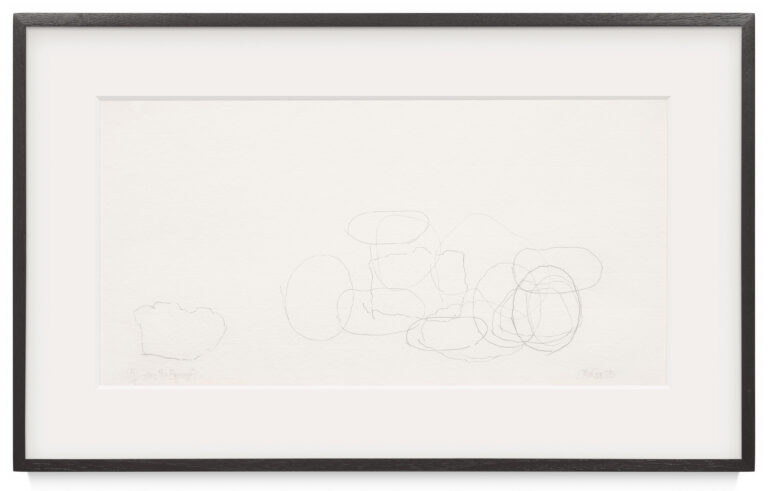
John Cage (1912–1992) was best known for his musical compositions. Breaking with established techniques of both composing and performing, Cage believed in a balance between chance operations and predetermined structures and thus created some of the most revolutionary works of music of the 20th century. Meanwhile, in addition to his musical work, from the late 1960s until his passing, he created numerous bodies of visual art. He made drawings and also had a very consistent practice of printmaking, with most being made in collaboration with the incredibly talented Kathan Brown’s Crown Point Press. Krakow Witkin Gallery’s current exhibition highlights the “Ryoanji” drawings and prints, a body of work inspired by the highly revered rock garden at Ryōan-ji (“Temple of the Peaceful Dragon”), a Zen Buddhist temple that the artist first visited in Kyoto, Japan, in 1962.
“I think of the garden or the space for the fifteen stones as being four staves, or two pages—each page having two staves. And the staves are actually the area of the garden. Knowing the whole of it, I can find by chance operations where to put which stone.”
– John Cage
While he initially explored his idea for the work in musical composition, and given that much of the score involved physically tracing stones to get the tonal changes, Cage felt it made sense to also explore the idea visually. Thus in 1992, when John Cage arrived at Crown Point Press to begin his, by then, yearly print project, he brought with him 16 rocks he had picked up in various places around the world. While within the actual rock garden, there are 15 rocks, Cage had brought 16 so that he could, for each print, select 15 by chance operations.
Like in the score for the musical composition, Cage chose to trace the stones as the main element of his new works. To locate the position of each individual rock on the plate, he consulted his computer-printed I Ching tables of chance operation. He then drew around the rock with a light drypoint line, repeating this over and over, each time finding a new position, all through chance operations. In each work in the series of prints, Cage varied the pressure he used in drawing, and of course the use of chance operations in placing the rocks assures that each of the versions is quite different. Because Ryōan-ji is contained in a narrow space, Cage would not allow any rock to cross the edge of the plate — he would swivel each rock, placing its flattest edge against an interior (non-printing) grid line. He used this same process for his graphite drawings.
Cage’s delicate but sure drawing style combined with the elegance of a finely executed line gives these prints their special qualities. Like Ryōan-ji, itself, they are quiet and meditative.
Paper size: 17 7/8 x 14 15/16 inches (45.4 x 37.9 cm)
Frame size: 20 3/8 x 17 3/8 inches (51.8 x 44.1 cm)
Signed and dated on verso in graphite
(Inventory #38988)
Paper size: 17 7/8 x 14 15/16 inches (45.4 x 37.9 cm)
Frame size: 20 3/8 x 17 3/8 inches (51.8 x 44.1 cm)
Signed and dated on verso in graphite
(Inventory #38988)
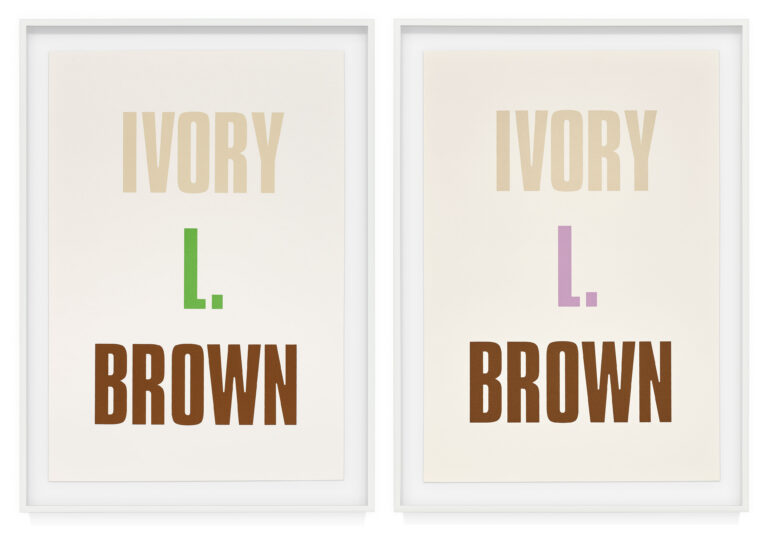
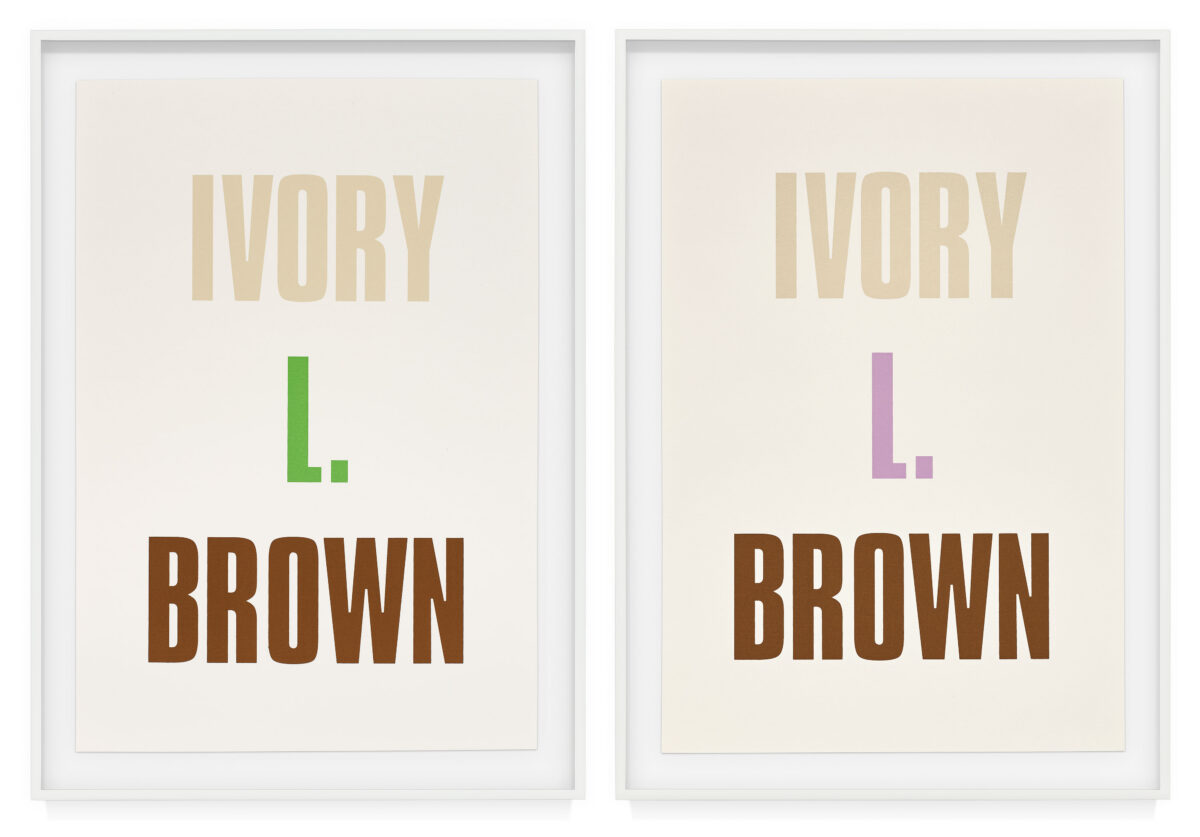
Paper size (each): 19 7/8 x 13 1/8 inches (50.5 x 33.3 cm each)
Frame size (each): 21 5/8 x 15 1/2 inches (54.9 x 39.4 cm each)
Unknown edition size and unnumbered except for 5 AP
Signed and numbered on verso in black ink
(Inventory #38989)
Paper size (each): 19 7/8 x 13 1/8 inches (50.5 x 33.3 cm each)
Frame size (each): 21 5/8 x 15 1/2 inches (54.9 x 39.4 cm each)
Unknown edition size and unnumbered except for 5 AP
Signed and numbered on verso in black ink
(Inventory #38989)
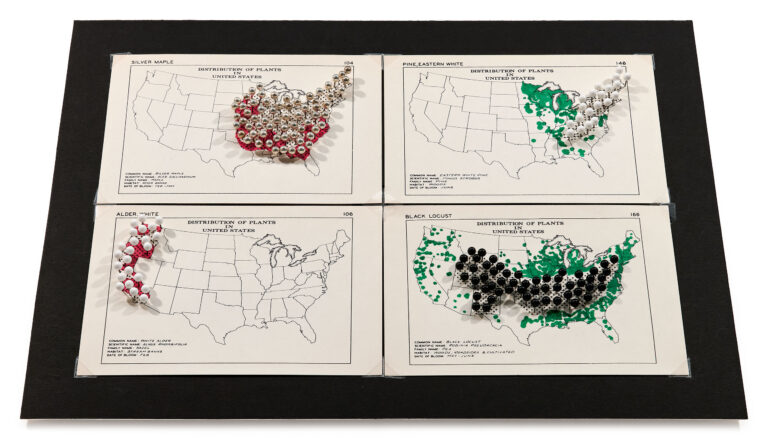
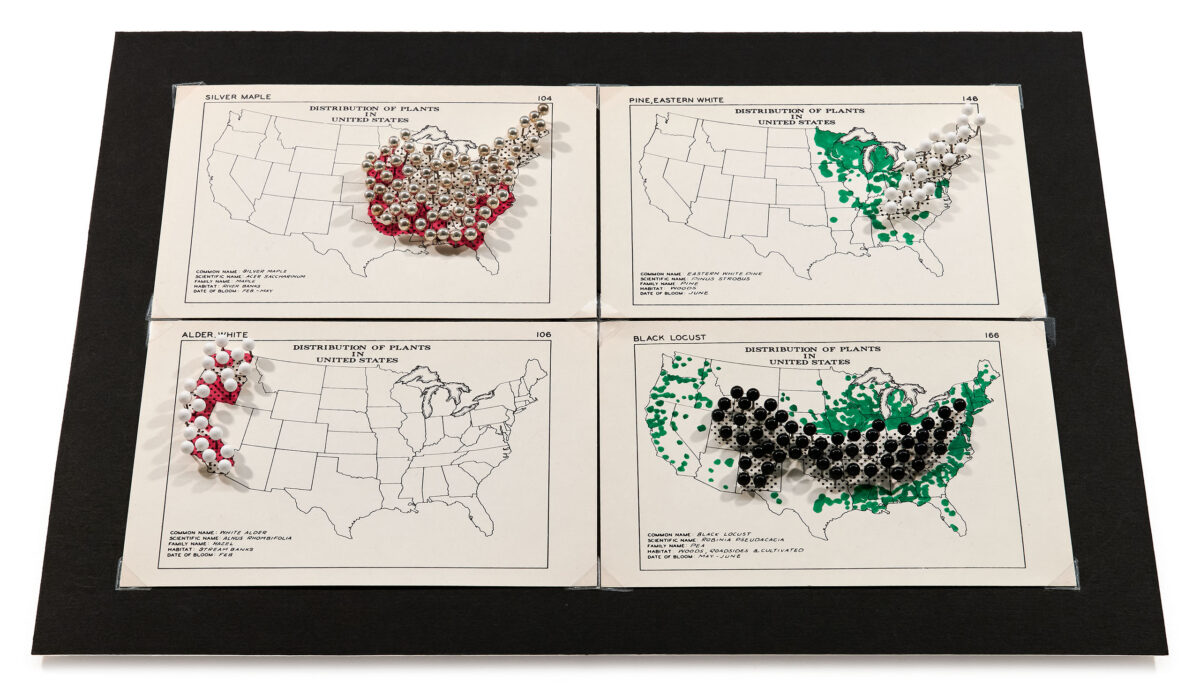
9 7/8 x 13 7/8 x 1/2 inches (25.1 x 35.2 x 1.3 cm)
Signed and dated verso in graphite
(Inventory #38992)
9 7/8 x 13 7/8 x 1/2 inches (25.1 x 35.2 x 1.3 cm)
Signed and dated verso in graphite
(Inventory #38992)
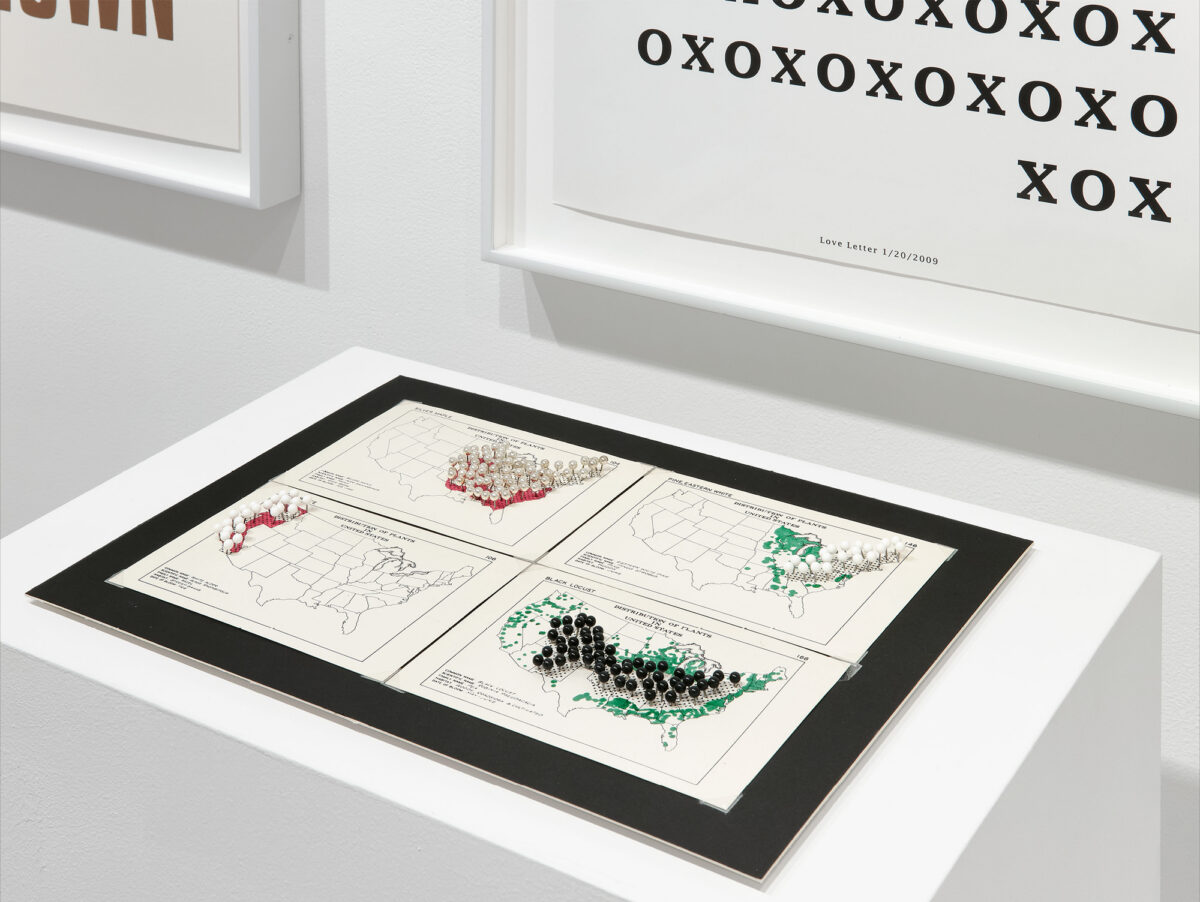
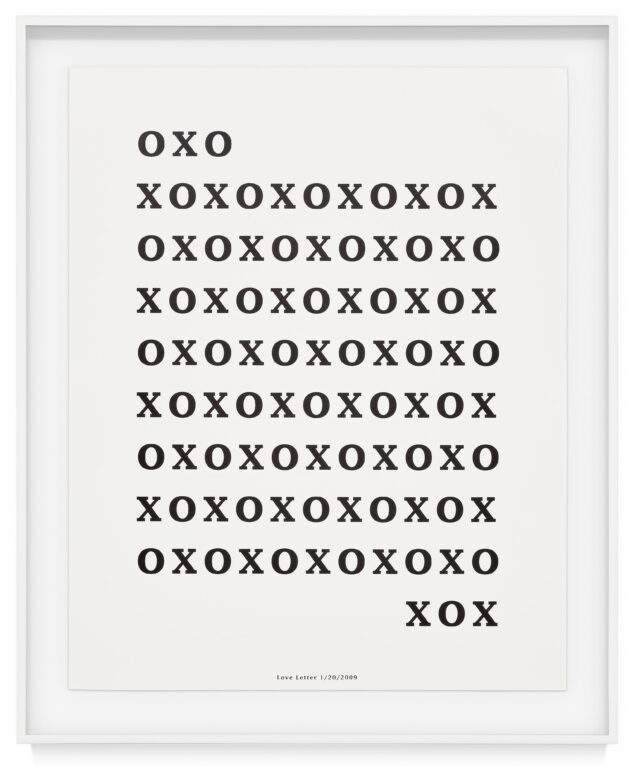
Image/paper size: 19 7/8 x 15 7/8 inches (50.5 x 40.3 cm)
Frame size: 22 3/4 x 18 7/8 inches (57.8 x 47.9 cm)
Edition of 100, 30 are signed and numbered , AP 5/5 , III PP
Signed and numbered on verso in graphite
(Inventory #38987)
Image/paper size: 19 7/8 x 15 7/8 inches (50.5 x 40.3 cm)
Frame size: 22 3/4 x 18 7/8 inches (57.8 x 47.9 cm)
Edition of 100, 30 are signed and numbered , AP 5/5 , III PP
Signed and numbered on verso in graphite
(Inventory #38987)
12 x 18 inches (30.5 x 46 cm)
Signed and dated verso in black ink
(Inventory #38991)
12 x 18 inches (30.5 x 46 cm)
Signed and dated verso in black ink
(Inventory #38991)
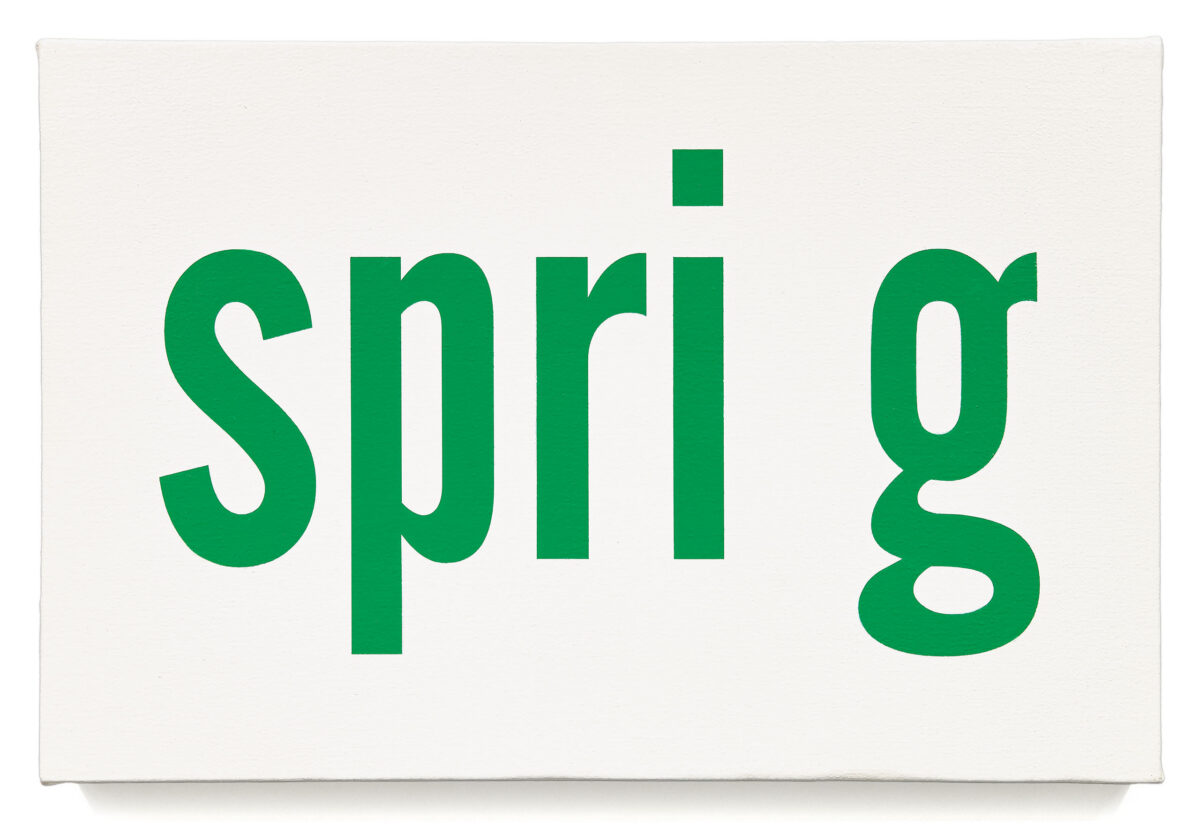
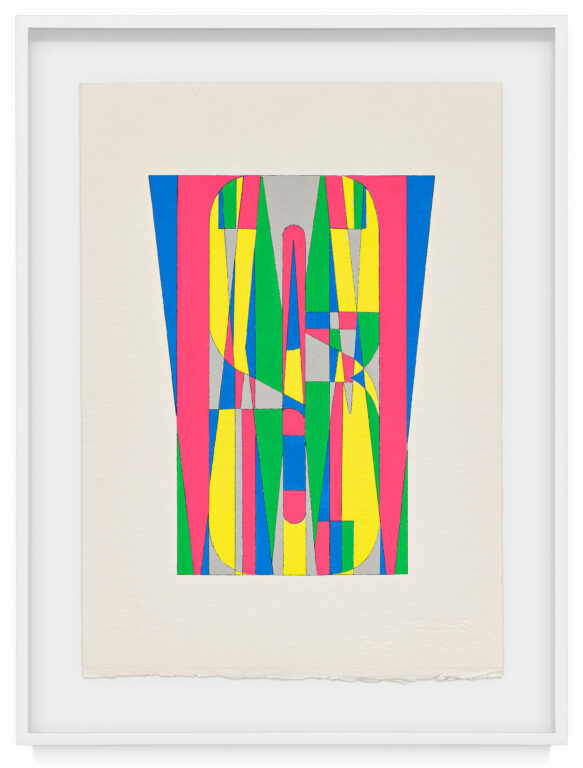
Image size: 9 5/8 x 6 7/8 inches (24.4 x 17.5 cm)
Paper size: 14 3/8 x 10 3/8 inches (36.5 x 26.4 cm)
Frame size: 17 3/8 x 13 1/8 inches (44.1 x 33.3 cm)
Signed, titled, and dated verso in graphite
(Inventory #38990)
Image size: 9 5/8 x 6 7/8 inches (24.4 x 17.5 cm)
Paper size: 14 3/8 x 10 3/8 inches (36.5 x 26.4 cm)
Frame size: 17 3/8 x 13 1/8 inches (44.1 x 33.3 cm)
Signed, titled, and dated verso in graphite
(Inventory #38990)
Paper size: 23 x 19 1/2 inches (58.4 x 49.5 cm)
Edition of 25
Signed, dated, and numbered on reverse in graphite
(Inventory #32238)
Paper size: 23 x 19 1/2 inches (58.4 x 49.5 cm)
Edition of 25
Signed, dated, and numbered on reverse in graphite
(Inventory #32238)
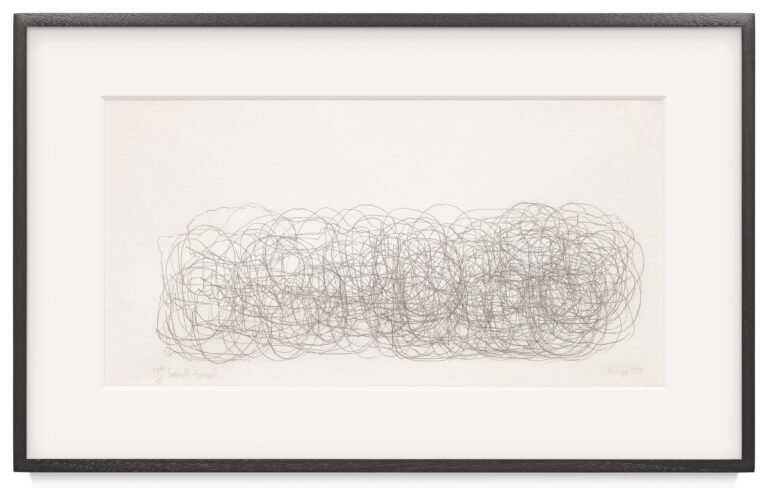
Paper size: 10 x 19 inches (25.4 x 48.3 cm)
Frame size: 14 7/8 x 24 inches (37.8 x 61 cm)
Signed and dated lower right, titled lower left in graphite
(Inventory #37248)
Paper size: 10 x 19 inches (25.4 x 48.3 cm)
Frame size: 14 7/8 x 24 inches (37.8 x 61 cm)
Signed and dated lower right, titled lower left in graphite
(Inventory #37248)
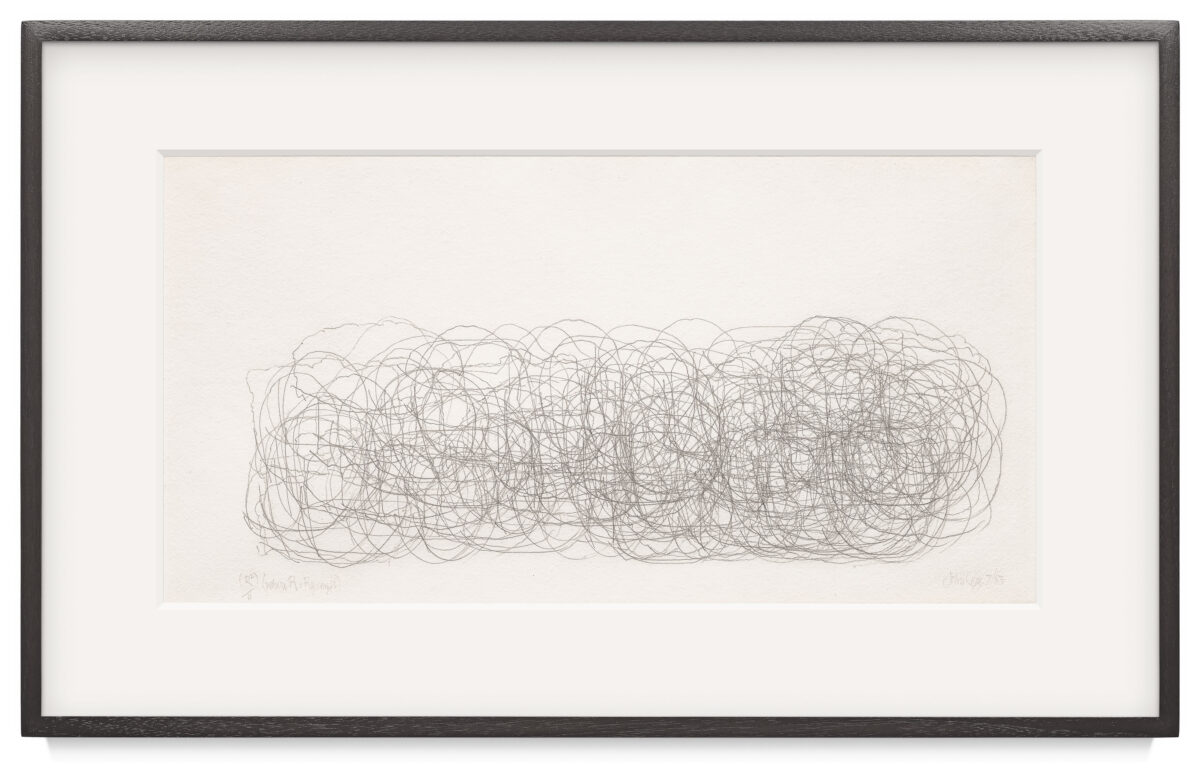
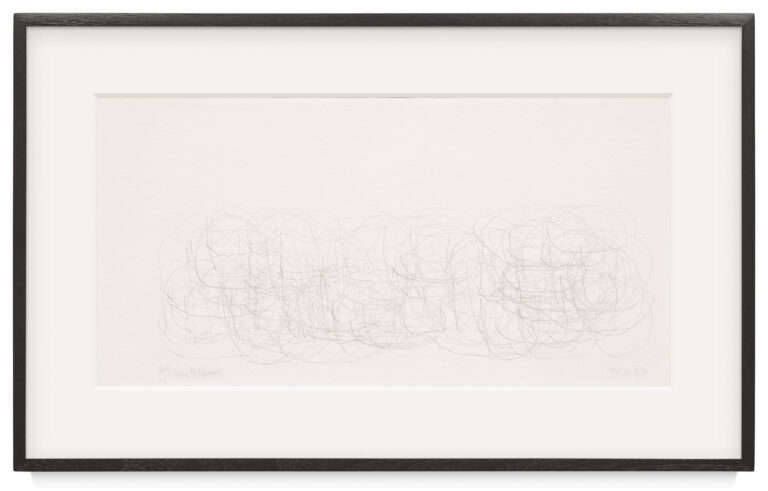
Paper size: 10 x 19 inches (25.4 x 48.3 cm)
Frame size: 14 7/8 x 24 inches (37.8 x 61 cm)
Signed and dated lower right, titled lower left in graphite
(Inventory #37250)
Paper size: 10 x 19 inches (25.4 x 48.3 cm)
Frame size: 14 7/8 x 24 inches (37.8 x 61 cm)
Signed and dated lower right, titled lower left in graphite
(Inventory #37250)
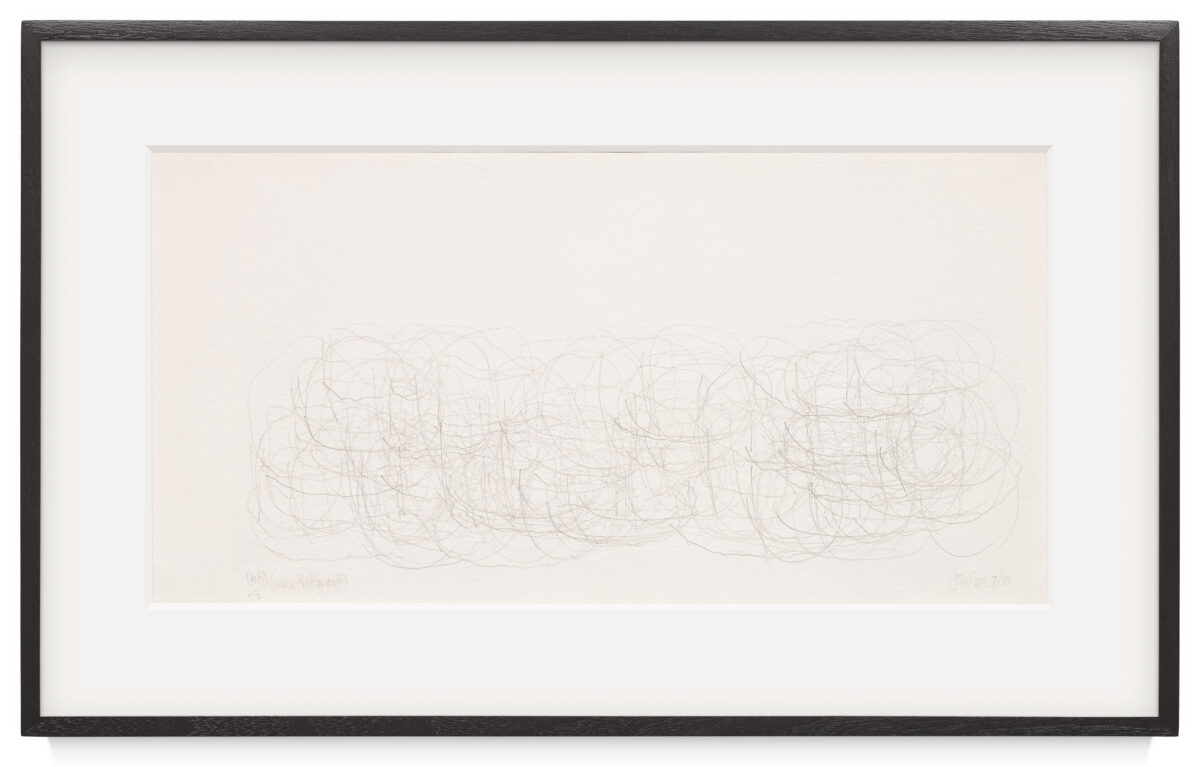
Paper size: 10 x 19 inches (25.4 x 48.3 cm)
Frame size: 14 7/8 x 24 inches (37.8 x 61 cm)
Signed and dated lower right, titled lower left in graphite
(Inventory #37249)
Paper size: 10 x 19 inches (25.4 x 48.3 cm)
Frame size: 14 7/8 x 24 inches (37.8 x 61 cm)
Signed and dated lower right, titled lower left in graphite
(Inventory #37249)
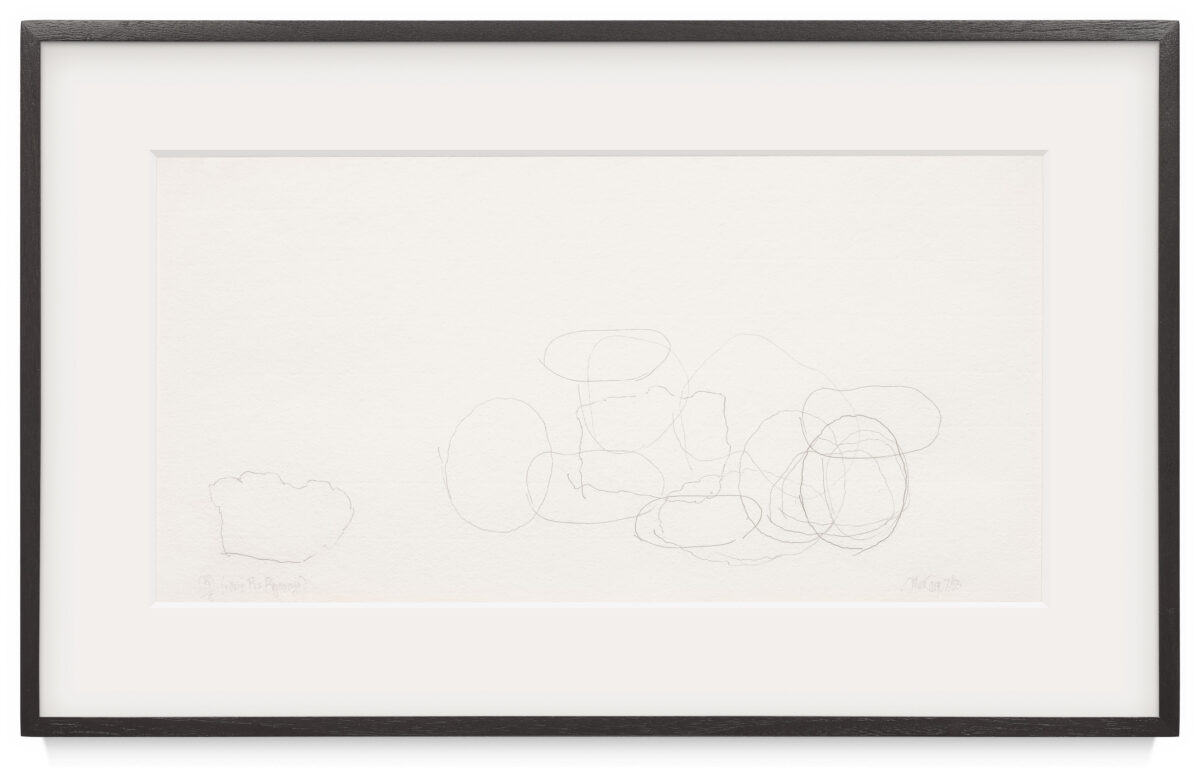
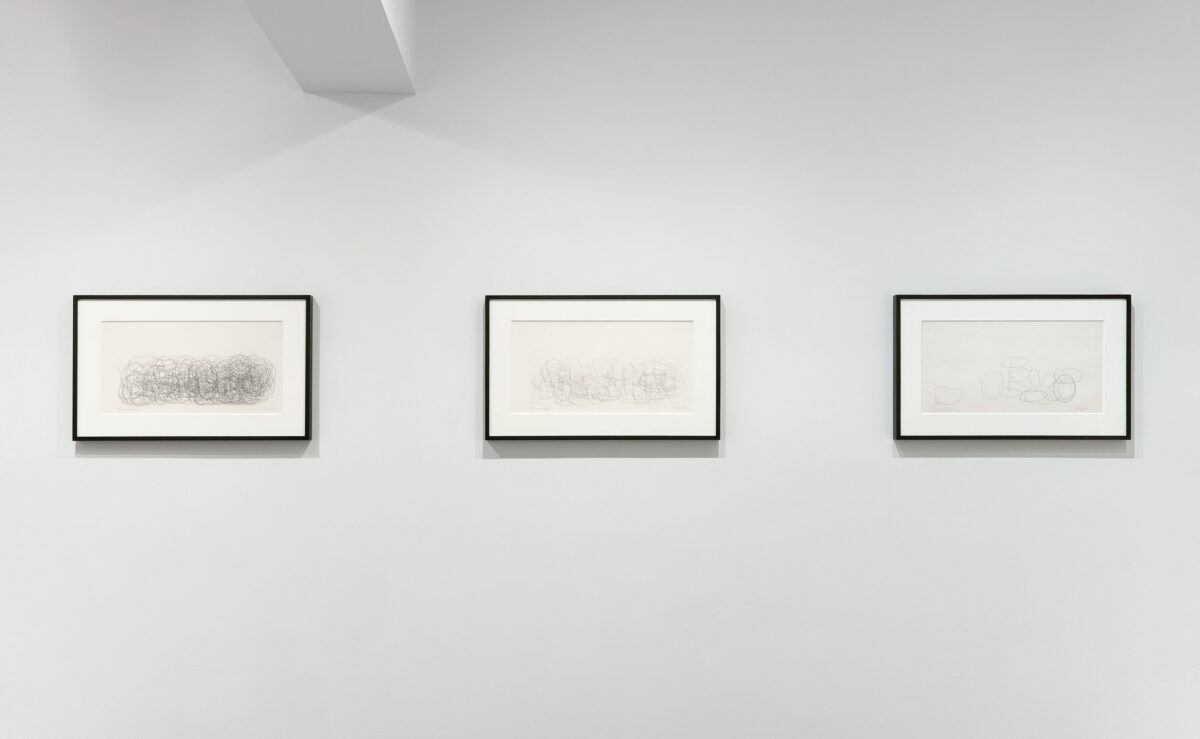
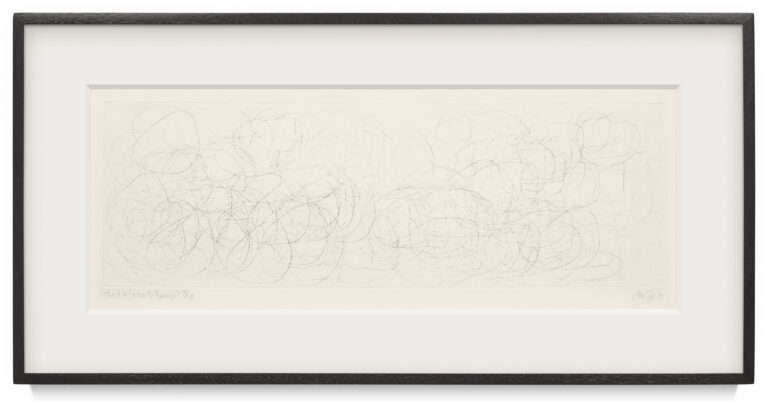
Image size: 7 x 21 1/2 inches (17.8 x 54.6 cm)
Paper size: 9 1/4 x 23 1/4 inches (23.5 x 59.1 cm)
Frame size: 13 3/4 x 27 3/8 inches (34.9 x 69.5 cm)
Edition of 25, 10 AP, TP G
Signed and dated lower right, titled lower left in graphite
(Inventory #37245)
Image size: 7 x 21 1/2 inches (17.8 x 54.6 cm)
Paper size: 9 1/4 x 23 1/4 inches (23.5 x 59.1 cm)
Frame size: 13 3/4 x 27 3/8 inches (34.9 x 69.5 cm)
Edition of 25, 10 AP, TP G
Signed and dated lower right, titled lower left in graphite
(Inventory #37245)
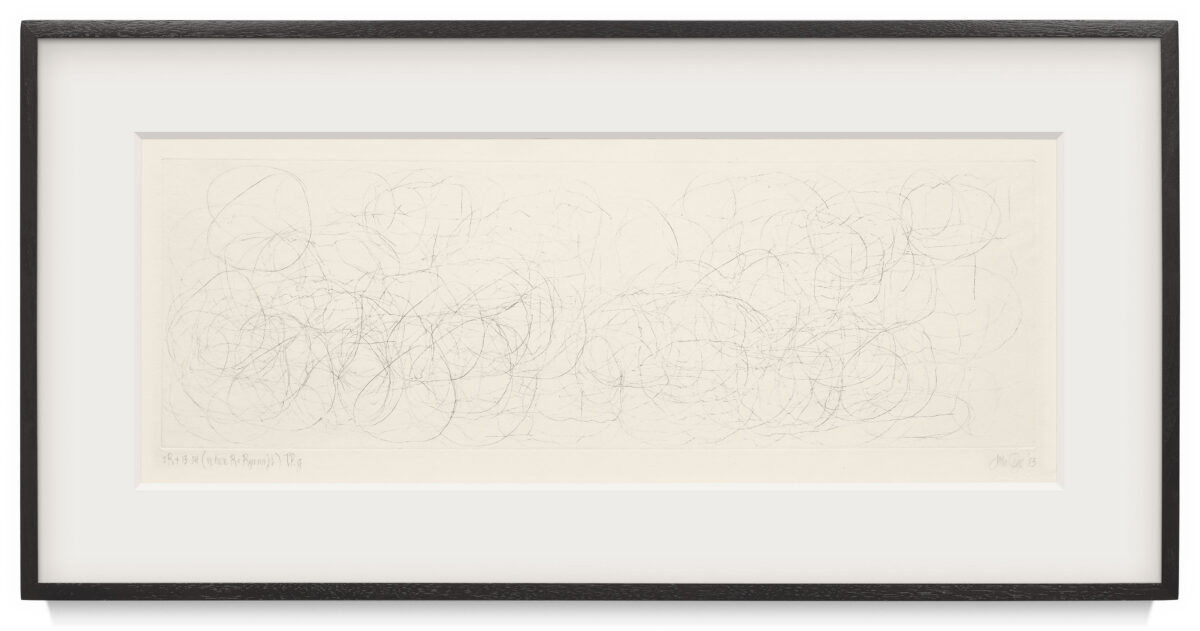

Image size: 7 x 21 1/2 inches (17.8 x 54.6 cm)
Paper size: 9 1/4 x 23 1/4 inches (23.5 x 59.1 cm)
Frame size: 13 3/4 x 27 3/8 inches (34.9 x 69.5 cm)
Edition of 25, 10 AP
Signed and dated lower right, titled lower left in graphite
(Inventory #37255)
Image size: 7 x 21 1/2 inches (17.8 x 54.6 cm)
Paper size: 9 1/4 x 23 1/4 inches (23.5 x 59.1 cm)
Frame size: 13 3/4 x 27 3/8 inches (34.9 x 69.5 cm)
Edition of 25, 10 AP
Signed and dated lower right, titled lower left in graphite
(Inventory #37255)